A Dungeon in Portencross Castle?

Portencross is an area shrouded in stories, myths and legends. Does it have its own dungeon?
At present, nobody knows for certain.

An Unsolved Mystery

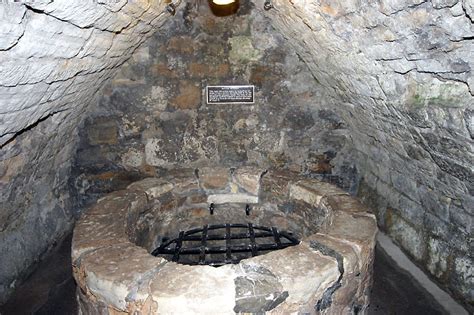
The chamber just outside the Great Hall under a large metal cover has never been archaeologically investigated. While its form appears similar to known bottle dungeons elsewhere in Scotland, there is currently no evidence to confirm its original purpose.

Archaeological excavation would be both expensive and technically challenging. Any deposits within the chamber could contain valuable evidence about the history of the castle and the people who lived and worked here. Excavation would also need to be carried out carefully to ensure that the structure of the castle was not affected.

For now, the feature remains one of Portencross Castle’s unanswered questions.

Is it really a medieval bottle dungeon? 

Could it have served as a storage chamber, a cellar, or some other forgotten feature of the castle?

Perhaps one day the mystery will be solved.

The Castle Today

Is there a Bottle Dungeon?

Hidden beneath a large metal cover behind the doorway to the Great Hall may lie one of Portencross Castle’s most intriguing mysteries.
The chamber has never been excavated, but its position and apparent form have led to suggestions that it could be a bottle dungeon, sometimes known as a pit prison.
 

Bottle Dungeons

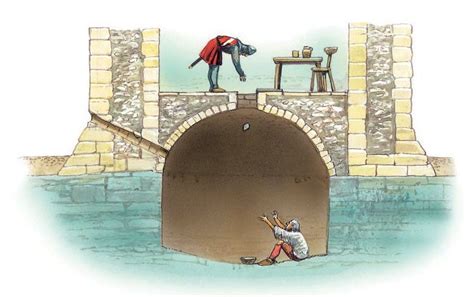
Bottle dungeons were a distinctive form of medieval prison. They were built with a narrow opening at ground level and a larger chamber below, giving them the shape of a bottle. Prisoners could be lowered into the chamber, but escape was almost impossible without assistance from above.
Unlike a conventional prison cell, a bottle dungeon offered little contact with the outside world. Those confined within could often hear daily life continuing above them – conversations, footsteps, feasts and celebrations – while remaining unable to see or take part in any of it.


Examples elsewhere

Similar structures can still be seen at Dundonald Castle and St Andrews Castle, where bottle dungeons survive as reminders of medieval justice and punishment.

The narrow opening was one of the key features of these prisons. Once lowered inside, a prisoner had little chance of climbing back out.

The wider chamber below provided just enough room for a prisoner, while the narrow shaft made escape virtually impossible.