The Cannon, a Galleon and The villagers of Portencross


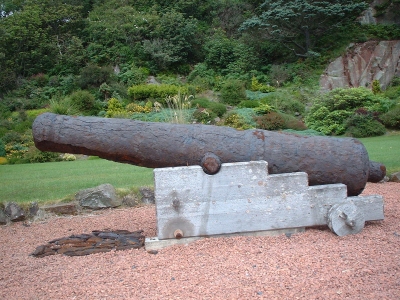
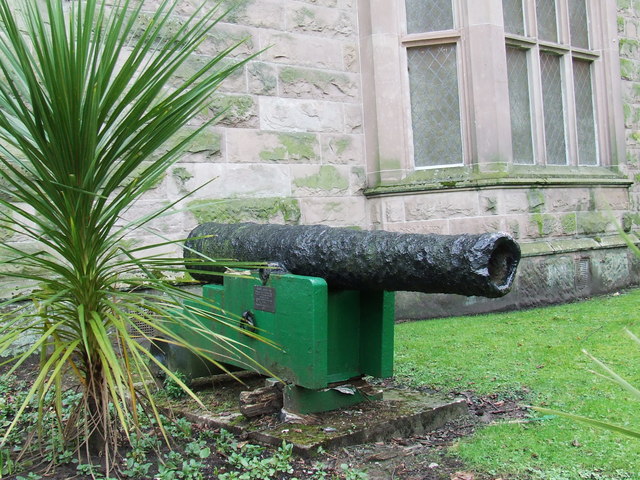
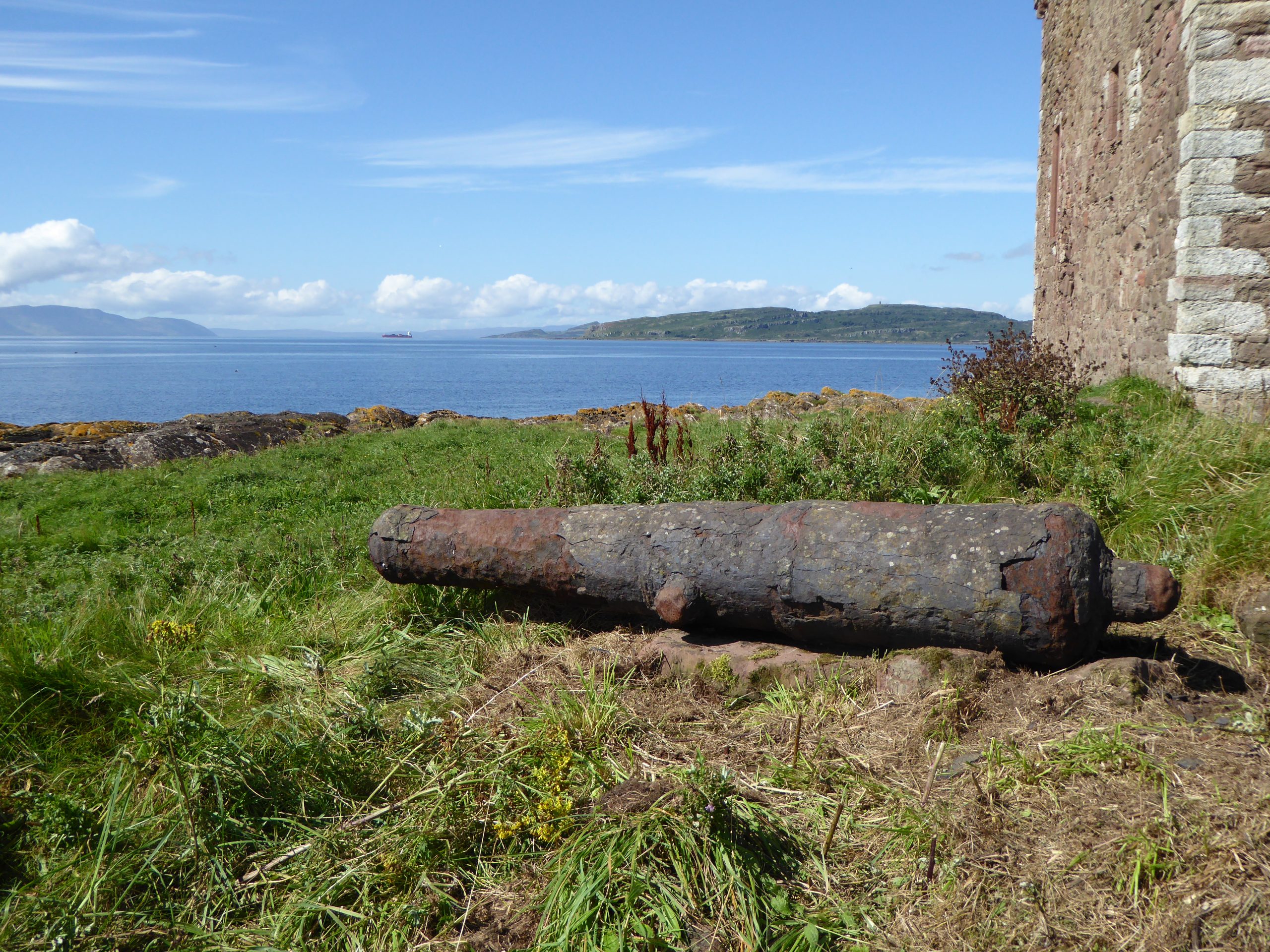
A cannon sits proudly outside Portencross Castle.
Where did it come from? How did it get there?
What is the link with Spain and
the arms trade in the 1500s?

The wreck of the Spanish Galleon


Just offshore from Portencross lies Wreck No. 4084, one of the village’s most enduring maritime mysteries. For centuries, local tradition has identified the wreck as a Spanish galleon lost in the aftermath of the defeat of the Spanish Armada in 1588. Whether or not that story is true, tales of the wreck have been passed down through generations, becoming an important part of Portencross’s folklore.

Interest in the wreck has been sustained by the discovery of cannon, cannonballs and other artefacts recovered from the seabed over the years. These finds suggest that a substantial armed vessel lies beneath the waters, although its exact identity has never been conclusively established – at least in public.

Whatever its true origins, Wreck No. 4084 remains one of Portencross’s most fascinating historical treasures. Resting beneath the waters overlooked by the castle, it offers a tantalising glimpse into Scotland’s rich maritime past and continues to inspire historians, archaeologists and visitors alike.

While the true story may never be fully known, the wreck remains one of Portencross’s most intriguing links to Scotland’s maritime past, adding another layer of history to the waters beneath the castle.

Although Wreck No. 4084 off Portencross is traditionally identified as a Spanish Armada galleon, its exact identity remains uncertain. Archaeologists note that artefacts from the Lady Margaret, wrecked nearby in 1770, may have mixed with material from the galleon. All this adds further mystery to the Portencross Cannon.

This illustration shows how the Spanish Galleon may have looked with Arran in the background.
A cannon has stood at Portencross Castle since the 1740s, serving as a lasting reminder of one of Scotland’s most intriguing maritime mysteries.
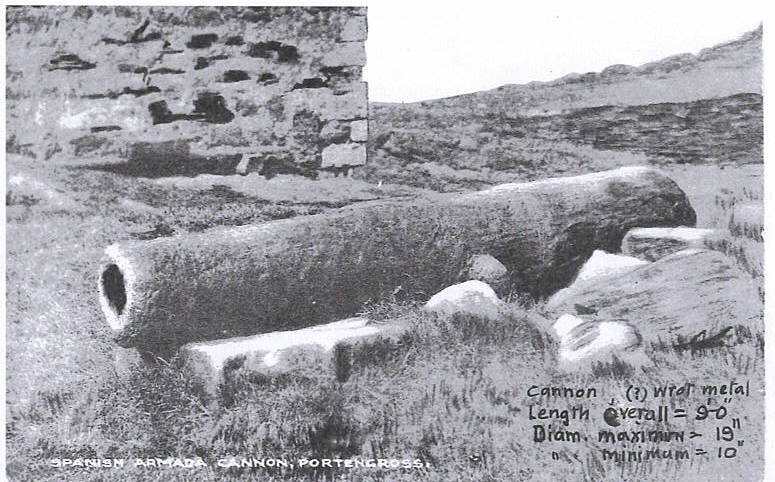
In August 1740, Sir Archibald Grant and Captain Roe organised an expedition to investigate a shipwreck that local people had long known about. According to contemporary accounts, it was the “country folk” who guided the searchers to the site. Using ropes stretched between two boats, with heavy lead weights dragging across the seabed, the divers located the wreck around 400 metres offshore in approximately 20 metres (65 feet) of water.

Much of the ship lay buried beneath the sand, but the divers reported that it contained numerous guns. Over the course of the salvage operation, they recovered ten iron cannon and ten brass cannon.

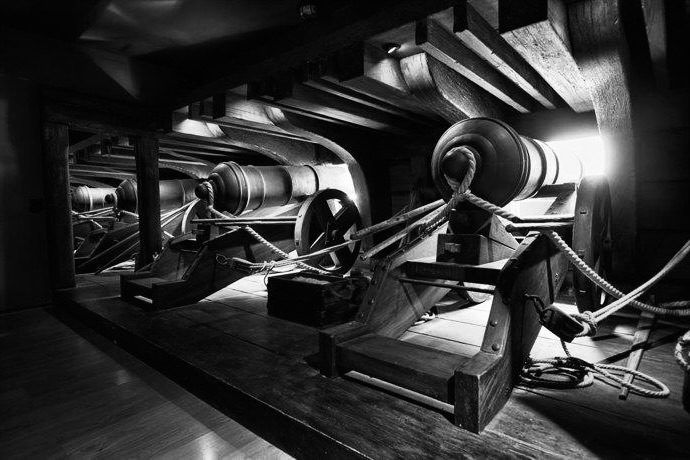
The brass guns provided an unexpected clue to the ship’s story. They were cast in England in 1584 by the founders Richard and John Phillips, bearing the royal initials E.R. (Elizabeth Regina), yet they had found their way into Spanish hands, probably through the thriving European arms trade of the sixteenth century. Their presence demonstrates how weapons crossed national borders long before the outbreak of war.

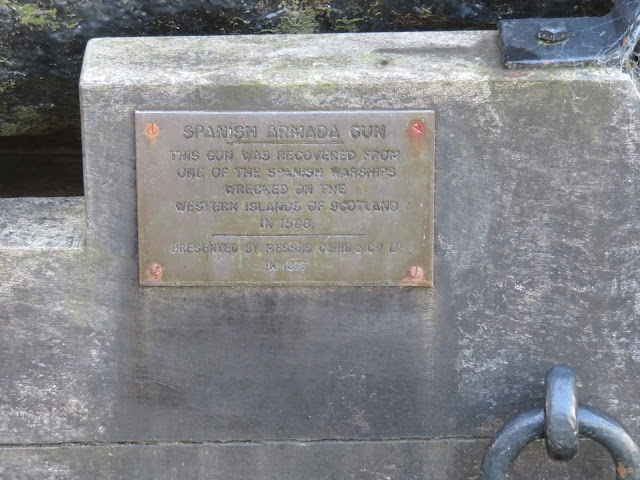
The iron cannon now displayed at Portencross Castle is believed to have come from this salvage. A report written in 1956 records that, during the nineteenth century, visitors could still make out what appeared to be a coat of arms—possibly a Spanish crown—cast into its surface. Another cannon recovered from the wreck is on display at the McLean Museum in Greenock.

Was it an Armada Ship?

For centuries, local tradition has maintained that the wreck is a Spanish galleon lost in the aftermath of the Spanish Armada of 1588. While this has never been conclusively proved, it remains an intriguing possibility.

Some historians have suggested that the wreck may be one of several missing Spanish vessels, including the San Pedro, San Juan, San Bartolomé, Santa María del Junca, Barca de Danzig or Santa Bárbara. The Santiago has also been proposed, although most evidence suggests she was lost off County Mayo in Ireland.

One local tradition even suggests that the wreck’s location was deliberately kept secret to help any surviving crew escape safely back to Spain. The Boyd family of Portencross, who supported Mary, Queen of Scots, may have looked sympathetically upon the Spanish cause, although no historical evidence has yet confirmed this story.

The Search Continues

Interest in the wreck has never faded. In August 2007, a geophysical survey of the seabed identified several magnetic anomalies that may represent surviving remains of the ship beneath the sand. Future archaeological investigations may finally reveal the wreck’s identity and settle a mystery that has endured for more than four centuries.

Until then, Wreck No. 4084 remains one of Portencross’s greatest hidden treasures. Lying quietly beneath the waters of the Firth of Clyde, just beyond the castle walls, it continues to capture the imagination of visitors, historians and local people alike.

Attempts at repair

Lorem ipsum dolor sit amet, consectetur adipiscing elit. Ut elit tellus, luctus nec ullamcorper mattis, pulvinar dapibus leo.

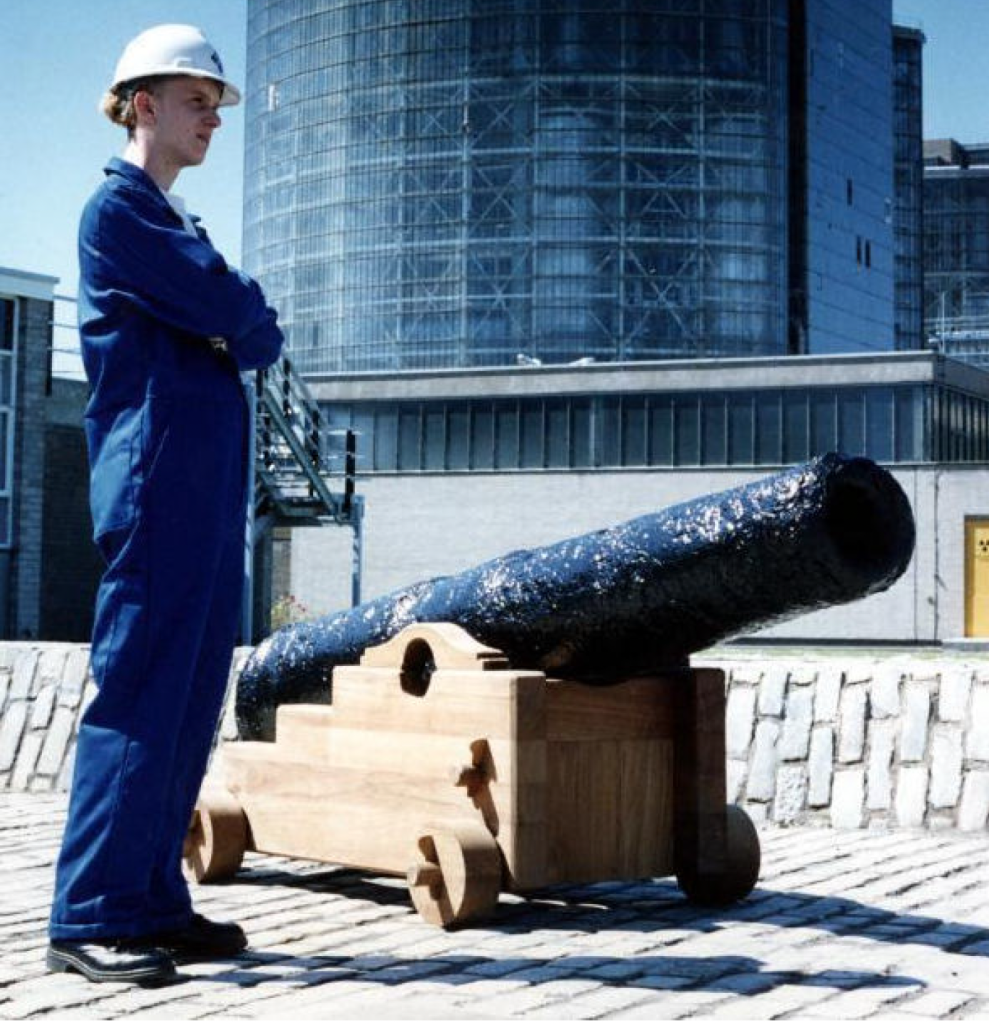
At one point, the Portencross Cannon had been covered in tar to preserve it.
During the period that Portencross Castle was under the ownership of the electricity generating company that ran Hunterson Nuclear Power Station, various attempts, including one in 1990, were made to repair the cannon. 
 
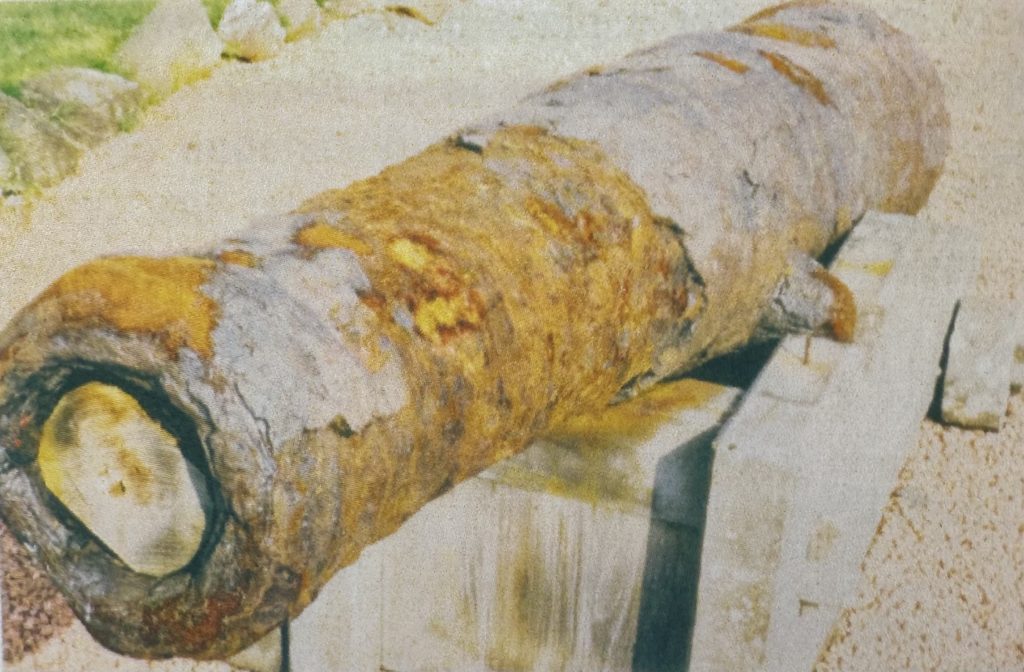
However, attempts failed and the cannon was left to deteriorate over a long period. 


The upside for visitors

Enterprising as ever, locals kept the pieces of cannon that had fallen off in layers due to rusting and the harsh elements at Portencross. 

As a result you can purchase a piece of the original cannon in a special box with its own certificate of authentication. These artefacts are available at the Castle during opening times. This is one way among many that Friends of Portencross Castle are able to raise funds to preserve the Castle and to keep it open as a community and historical resource and visitor centre.
Adjustments and abandonment: 1600s and 1700s

The Boyd family made some final alterations at this time, including to the parapet walkway. They raised the spiral staircase to reach the new upper attic rooms and walkway.


Portencross Castle

The castle remained the seat of the Boyds until the restoration of Charles II (1660) after which the family moved to a mansion house in Portencross. The Boyds still had possession of the surrounding estate until 1737.
After that time, fishermen made use of the building and they may have enlarged the basement windows. During the 1700s, around 30 fishing boats worked from Portencross, employing as many as 150 men. Crews of four people caught herring, cod and oysters or collected kelp. After Portencross Castle was abandoned in the 1700s, it was used for storage of nets and other fishing equipment. The castle was probably still in use after the roof blew off in 1739 because the vaulted ceiling would have protected the great hall. Fishermen may have altered the shape of the fireplace in the great hall. After this period, sporadic work took place to repair and preserve the castle.

Lorem ipsum dolor sit amet, consectetur adipiscing elit. Ut elit tellus, luctus nec ullamcorper mattis, pulvinar dapibus leo.

Lorem ipsum dolor sit amet, consectetur adipiscing elit. Ut elit tellus, luctus nec ullamcorper mattis, pulvinar dapibus leo.

The Portencross cannon

According to tradition, an iron cannon, one of a number salvaged from the Portencross Spanish Armada shipwreck, was given to the villagers for their help at the time of the location of the wreck in 1740. The cannon is of Spanish design. In 1990, specialists attempted to conserve the cannon. They removed layers of tar, but their efforts failed. A very rusty and decomposing cannon was returned to Portencross village in 2003.